
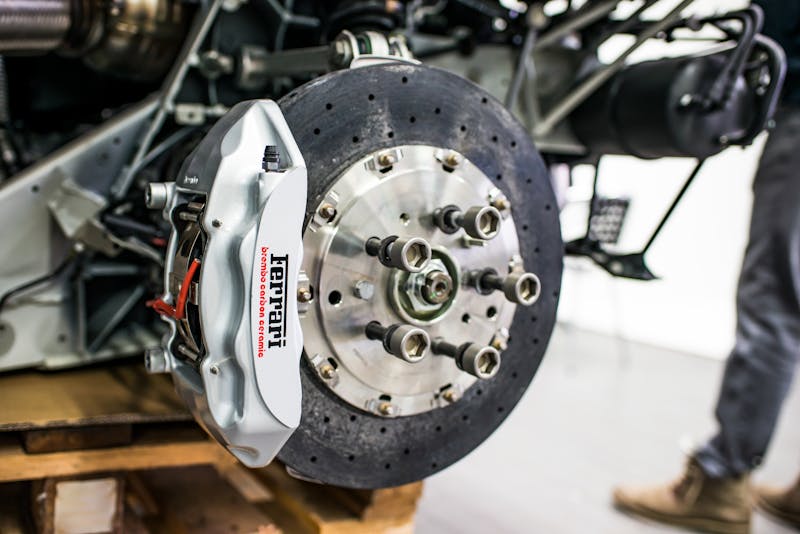
Your brakes are the one thing on your car you absolutely cannot ignore. And if you drive in San Diego — with the hills in La Jolla, the stop-and-go on the I-5, and the winding roads through Torrey Pines — you're putting more stress on them than you think.
Most people don't think about their brakes until something feels wrong. By then, a simple pad replacement can turn into a much bigger repair. Here's everything you need to know about when to replace your brakes, what it costs, and why San Diego is tougher on them than most cities.
How Long Do Brake Pads Actually Last?
The standard answer you'll hear is 30,000 to 70,000 miles. That's a huge range, and where you fall depends almost entirely on how and where you drive.
Highway driving with minimal braking? You'll get closer to 70,000. But if you're doing city driving in San Diego — commuting on the I-15, crawling through downtown, or navigating the hills in Clairemont and Mission Hills — expect your pads to wear out much faster. We regularly see San Diego drivers needing new pads at 25,000 to 35,000 miles.
Commuters on the I-15 and I-805 corridors tend to wear through pads the fastest. Those routes are packed during rush hour, and all that stop-and-go adds up. If you're doing that drive five days a week, your brakes are working overtime.
Other factors that shorten pad life include driving a heavier vehicle like an SUV or truck, riding the brakes downhill, and using cheap aftermarket pads that don't hold up as well.
Warning Signs Your Brakes Need Replacing
Your car will tell you when something is wrong with your brakes. You just have to know what to listen and feel for.
- Squealing or squeaking when you brake. This is usually the first sign. Most brake pads have a built-in wear indicator — a small metal tab that contacts the rotor when the pad gets thin. That high-pitched squeal is the indicator doing its job.
- Grinding metal-on-metal sound. If you hear grinding, you've gone past the pads entirely. Metal is now hitting metal, which means your rotors are being damaged with every stop. This is the sound of a repair bill doubling.
- Brake pedal feels soft or spongy. If you have to push the pedal further than usual to slow down, there could be air in the brake lines, low brake fluid, or severely worn pads. Either way, get it checked immediately.
- Car pulls to one side when braking. This usually means one side is wearing faster than the other, or you have a stuck caliper. It's a safety issue — your braking isn't even, which makes it harder to control the car.
- Vibration or pulsing when braking. If you feel a shudder through the steering wheel or brake pedal when you stop, your rotors are likely warped. This happens from excessive heat buildup, especially after heavy braking on long downhill stretches.
- Brake warning light on your dashboard. Don't ignore this. Some cars have sensors that measure pad thickness and trigger a warning when they get too low. If this light comes on, it's time.
Pads vs. Rotors: What's the Difference?
This is one of the most common questions we get, so let's break it down simply.
Brake pads are the friction material that clamps down on the rotor to slow your car. Think of them like the rubber on a shoe sole — they're designed to wear down over time. When the pad material gets thin, you replace them. This is normal maintenance.
Brake rotors are the metal discs that the pads squeeze against. They're the big shiny discs you can see through your wheel spokes. Rotors are built to last much longer than pads, typically 50,000 to 70,000 miles, and can sometimes be resurfaced instead of replaced.
Here's where it gets expensive: if you let your brake pads wear all the way down to bare metal, that metal grinds directly against your rotors. It scores deep grooves into the rotor surface and warps them from the heat. At that point, you can't just replace pads — you need new rotors too, and the cost roughly doubles.
The takeaway is simple. Replace your pads when they're worn, and you protect your rotors. Wait too long, and you're paying for both.
What Does Brake Replacement Cost in San Diego?
At a traditional shop in San Diego, you're typically looking at $300 to $600 per axle for brake pad replacement with labor. That includes parts and about an hour or two of shop time. If your rotors need replacing too, it goes higher.
With Gocanics, brake replacement typically costs 20 to 40% less than a traditional shop. We don't have the overhead of a physical location — no rent, no waiting room, no front desk staff. Those savings go straight to you.
We use OEM-quality parts on every brake job. That means the same grade of pad and rotor that your car came with from the factory. We don't cut corners with cheap parts that wear out in six months.
And because we come to you, there's no sitting in a waiting room and no arranging a ride. We do the work in your driveway, at your office parking lot, or wherever your car is parked.
Why San Diego Is Harder on Brakes
San Diego is one of the best places to live in the country, but the geography and driving conditions are rough on your braking system. Here's why:
- Hilly terrain everywhere. La Jolla, Clairemont, Mission Hills, Banker's Hill, Kensington — San Diego is full of steep grades. Every time you drive downhill, you're riding the brakes. That generates heat, and heat is what wears pads and warps rotors.
- Coastal humidity and salt air. If you live anywhere near the coast, from Imperial Beach to Oceanside, moisture and salt air cause surface rust on your rotors. You've probably noticed the orange film on your rotors after your car sits for a few days. That rust is abrasive and wears pads down faster.
- Heavy traffic corridors. The I-5, I-15, I-805, and the 163 are bumper-to-bumper during commute hours. All that constant braking and accelerating is the worst possible scenario for brake wear. It's the reason San Diego drivers burn through pads 30 to 40% faster than the national average.
- Stop lights and surface streets downtown. Downtown, Hillcrest, North Park, and the surrounding neighborhoods are packed with traffic lights, stop signs, and pedestrian crossings. If you drive these areas daily, your brakes never get a break.
Don't Wait Until You Hear Grinding
This is the single most important thing we can tell you. By the time you hear that grinding sound, your rotors are already being damaged. What could have been a straightforward pad replacement is now a bigger job that costs significantly more.
Here's a good rule of thumb: get your brakes inspected at 30,000 miles, or at the very first squeak you hear. Even if the pads still have some life left, at least you'll know where you stand and can plan ahead instead of dealing with an emergency.
We can inspect your brakes at your home in about 15 minutes. We'll measure the pad thickness, check the rotors for wear and warping, inspect the brake fluid level, and give you an honest assessment of how much life is left. No pressure, no upselling — just the facts so you can make the right call.
If they do need replacing, we can usually get it done the same day. We bring everything we need to your location, and the job takes about an hour per axle.
Your brakes keep you and everyone around you safe on the road. Don't wait until something feels wrong to think about them. A quick inspection now can save you hundreds of dollars and a lot of stress later.
We service every city in San Diego County, from Chula Vista to Escondido, El Cajon to San Marcos, and everywhere in between.
Time for a brake check?
Book a brake inspection or replacement. We come to your home or office anywhere in San Diego County.
Book a Brake InspectionGot questions about your brakes or want a second opinion on a quote from a shop? Call us at (619) 259-0167. We're happy to help.